Army West Point Athletics
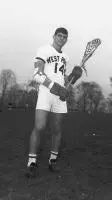
Competition Helps Cafaro Earn Hall of Fame Honor
September 03, 2007 | General
Editor's Note: This is the fourth in a series of stories profiling the Kenna Hall of Army Sports inductees, Class of 2007. Each week, goARMYsports.com will take a look at these outstanding athletes and their accomplishments, leading into the induction on Sept. 28.
Tom Cafaro has always been a competitor. Whether in a game of lacrosse, a pick-up basketball game, tennis or chess, he loved to challenge himself.
All that competition paid of for Cafaro, as did his athletic success. Cafaro, who earned some impressive national trophies during his days as lacrosse player, including a national championship, will be inducted into the Army Sports Hall of Fame, along with six others, permanently establishing their place in history.
Cafaro, Carl Ullrich, Alma Hulse, Barry DeBolt, Arnold Galiffa, Col. Charles Oliver and “Lighthorse” Harry Wilson will be enshrined into the Kenna Hall of Army Sports during a “black tie” ceremony Sept. 28 at West Point. The group will also be honored during the football game against Temple the next day.
The Army Sports Hall of Fame is a subset of the Kenna Hall of Army Sports, a comprehensive museum display of Army's proud intercollegiate athletic program. It is located on the third floor of Kimsey Athletic Center, Army's mammoth football training facility that opened during the spring of 2003.
A two-time first-team All-American, Cafaro was inducted into the National Lacrosse Hall of Fame. He was a member of the NCAA’s Silver Anniversary Lacrosse squad and was a vital contributor to Army’s 1969 national championship team.
He also won the Lt. Ray Enners Award as the nation’s most outstanding player in 1971 and the Jack Turnbull Award as the country’s top attackman that same year.
Cafaro graduated with six Academy records and still holds four of them: points in a single season (85), goals in a single season (51), points in a postseason (18) and goals in a postseason game (7). He ranks sixth all-time in scoring (167), ninth in goals (96) and seventh in assists (71). He scored seven goals against Cornell in the 1971 semifinals (still a record for goals in an NCAA semifinal), the third best single game performance in Army history.
Cafaro averaged 6.54 points per game in 1971, a feat that still lists 17th in NCAA history. He registered 18 points in just two NCAA games in 1971, an NCAA record at the time.
Seven Questions With Tom Cafaro
Reaction When Informed You Were Chosen: “It’s a good feeling and a nice honor, obviously. It is nice to be thought of and be in that kind of company.”
Favorite Athletic Memory: “Winning the 1969 national championship was certainly one of them and the noon time hoops games when I was coaching there.”
Favorite West Point Memory: “Graduation. The Academy is a long grind and it is nice to take that step after working so hard for four years and getting out and being a soldier, which is what we trained for.”
What Does It Mean To Be Inducted: “It’s a nice honor and a little humbling. We have some football stars in Army athletics and to be inducted into the same hall of fame is humbling and enjoyable.”
What Role Did Your Athletics Play In Shaping Your Personality: “Your personality has a role in shaping what kind of athlete you are. When you ask people why they participate in sports, they often say for fun. Fun means something different for everyone. For me, it was about competition. I love to compete and love to play against people who are a little better than me, whether it was lacrosse, tennis or chess, it didn’t matter. The better the people you compete against, the more fun it is. My personality is such that I love to compete and therefore enjoyed playing sports at the highest level.”
What’s The Biggest Difference At West Point: “I don’t know if West Point has changed all that much. The difference between West Point and society has always been more self-discipline. You have to be self-disciplined to do well at the Academy whether it be academics or sports. We had some things that they probably don’t do now but I think the difference is the same. They are doing some good things at the Academy and the way they develop officers. The difference between the Academy and society is the same. It is just as hard for kids coming in today as it was for us. I have a lot of respect for kids coming in and that it is still one of the most selective colleges in the nation.”
Who Had The Biggest Influence On Your Athletic Career: “My father (Stanley) probably. He exposed me to every sport. I was probably the only kid with a pole vaulting pit in his backyard. He was a very positive role model and got me involved in sports. He was involved and encouraged me in all my athletics pursuits. When I first started playing lacrosse, he got some banged up baseball catchers gear and was a goalie and I learned how to shoot. I had a lot of fun growing up and he was always very positive and tried to help me as best as he could.”
Tickets for the event are available to the public and can be purchased by calling Army's External Operations Office at 845-938-2322. Proceeds will be directed to a fund that supports the daily care, maintenance and growth of the Kenna Hall of Army Sports and Army Sports Hall of Fame.