Army West Point Athletics
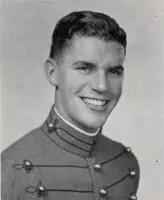
Racquet Skills Earn Oliver Spot In Hall Of Fame
August 20, 2007 | General
Editor's Note: This is the second in a series of stories profiling the Kenna Hall of Army Sports inductees, Class of 2007. Each week, goARMYsports.com will take a look at these outstanding athletes and their accomplishments, leading into the induction on Sept. 28.
Charles Oliver won a national championship as a high school junior and was chosen to represent the United States in the Junior Davis Cup.
Then he came to West Point and put his skills with a racquet on display. When he concluded his academics at West Point, Oliver earned six varsity letters, served as a team captain for two sports and defeated some of the top tennis players in the country.
This fall he, along with six others, will be inducted into the Army Sports Hall of Fame, permanently establishing their place in history.
Carl Ullrich, Thomas Cafaro, Alma Hulse, Barry DeBolt, Arnold Galiffa and “Lighthorse” Harry Wilson will be enshrined into the Kenna Hall of Army Sports during a “black tie” ceremony Sept. 28 at West Point. The group will also be honored during the football game against Temple the next day.
The Army Sports Hall of Fame is a subset of the Kenna Hall of Army Sports, a comprehensive museum display of Army's proud intercollegiate athletic program. It is located on the third floor of Kimsey Athletic Center, Army's mammoth football training facility that opened during the spring of 2003.
Following a stellar scholastic career, Oliver earned four varsity letters in tennis after playing No. 1 singles and doubles. He turned down a scholarship offer from tennis power William & Mary and was part of the first squash team at Army and earned two varsity letters. He had just five losses as the No. 1 tennis singles player and was a part of four wins against Navy. He racked up a 64-23 mark in tennis and beat Navy all four years. Among his noteworthy victories were wins against Dick Savitt of Cornell to win the Eastern Intercollegiate Tennis Championship and against future Wimbledon and U.S. Open champion Vic Seixas.
Following his graduation from the Academy, Oliver turned to coaching and guided the Air Force men’s team for five years and completed a 30-year military career where he retired as Colonel.
Six Questions With Col. (Ret.) Charles W. Oliver
Reaction When Informed You Were Chosen: “I had a couple of phone calls telling me. One was from a fellow who called me and then someone at West Point sent me an e-mail before I received the official notification in the mail. I was very pleased when I found out. When you get to my age, it’s nice to be remembered.”
Favorite Athletic Memory: “We were the only team to beat Navy four straight years. I remember “Red” Blaik was the athletic director and football coach and he called the captains in to give us a pep talk. The only teams with winning records against Navy were tennis and football and football tied that year. We went down to Annapolis and after two or three hours all of the matches were done except one. The last match was tied 4-4 and it was my roommate Harry Maihafer. He came over to the fence and asked what the score was. He has a heart as big as his body and pulled it out. I knew the only way he was going to lose was if he was carried off the court. I was very proud of my teammates and also very proud to be elected captain to two teams.
“Another thing that left a lasting impression was the quality of the institution. At the NCAA convention every year, they elect a president of the Intercollegiate Squash Association. I was elected as a senior and didn’t think much about it. All of the other teams were Ivy League schools, guys who went to prep schools. I was a product of public schools and they still had enough respect for West Point to elect me. They really had a tremendous amount of respect for the Academy.”
Favorite West Point Memory: “This is a true story and a number of my classmates will remember it. When I came to West Point, I was told to bring two tennis racquets. So I show up as a “buck” private with this little overnight GI bag with two racquets hanging out. I hit the area and then rushed to the barracks. I was greeted by a guy who had the loudest voice ever. He said, “what do you think this is a country club?” He told me to drop my bag and the whole detail worked me over for the next half hour as everyone else walked right in.”
What Does It Mean To Be Inducted: “This is a great honor. To be put into a hall of fame at an institution like West Point with all those great athletes is truly an honor. I was friends with (Felix) Blanchard and (Glenn) Davis and met (Pete) Dawkins and also Doug McKenna. Those are quality guys who were great athletes and are really amazing people.”
What Role Did Your Athletics Play In Shaping Your Personality: “It played a very big role and teaches you to be on your own. I played a lot of team sports when I was a kid and I always encouraged my athletes to play team sports. You learn things in team sports so when you compete as an individual you never get down. You also gain self confidence and learn to never give up. Sports taught me to never give up, no matter what the situation. It teaches you self confidence and to be self reliant as well as the key aspects of teamwork.”
What’s The Biggest Difference At West Point: “I was there about three years ago and the biggest difference was the (Lichtenberg) tennis complex, that’s awesome. They were building some other physical things that I didn’t get to see but the tennis center was amazing.”
Who Had The Biggest Influence On Your Athletic Career: “My parents (Walter and Lucille). My Dad was a brilliant man, the valedictorian of his high school class, a state swimmer who enlisted in World War I rather than take a scholarship Rutgers. When he finished the war, he married mom and got through Rutgers night school. When I was 8, I started hitting in the backyard and he encouraged me. I have no idea what he saw in me, but he encouraged me. In fact, he thought I was very good. His support was probably the biggest influence.”
Tickets for the event are available to the public and can be purchased by calling Army's External Operations Office at 845-938-2322. Proceeds will be directed to a fund that supports the daily care, maintenance and growth of the Kenna Hall of Army Sports and Army Sports Hall of Fame.