
Army West Point Athletics
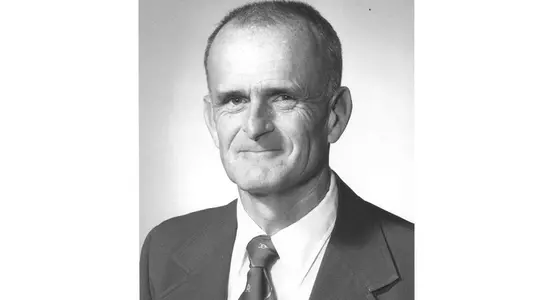
Former Athletic Director Among Hall Of Fame Inductees
August 13, 2007 | Athletics
The tradition of the Army Athletic Association was for a Colonel to serve as athletic director on a three-year rotation.
Carl Ullrich arrived on the banks of the Hudson in 1980 and broke that mold, among many others. Ullrich, the first civilian to ever oversee the Army athletic department, brought in good people and fostered a "team-first" attitude, helped restore the football team to national prominence and dramatically improved the facilities during his 10-year stay.
This fall he, along with six others, will be inducted into the Army Sports Hall of Fame, permanently establishing their place in history.
Ullrich, Thomas Cafaro, Alma Hulse, Barry DeBolt, Arnold Galiffa, Col. Charles Oliver and "Lighthorse" Harry Wilson will be enshrined into the Kenna Hall of Army Sports during a "black tie" ceremony Sept. 28 at West Point. The group will also be honored during the football game against Temple the next day.
The Army Sports Hall of Fame is a subset of the Kenna Hall of Army Sports, a comprehensive museum display of Army's proud intercollegiate athletic program. It is located on the third floor of Kimsey Athletic Center, Army's mammoth football training facility that opened during the spring of 2003.
Ullrich made many hires during his tenure at West Point but the most notable was Jim Young as head football coach. Young guided the Black Knights to five winning seasons in six years, including the first three bowl games in school history.
The Black Knights won three Commander in Chiefs' Trophy titles under Ullrich (1984, '86 and '88) and went 2-1 in bowl games. Army beat Michigan State 10-6 in the 1984 Cherry Bowl and Illinois in the Peach Bowl a season later.
"Winning the Commander in Chief's Trophy was very special as well as the trip to Washington, D.C. and to meet the President," Ullrich said recently. "Those were great experiences to see the player's reaction to standing in the Oval Office and taking pictures with the President. President (George H.W.) Bush was unbelievable and made us all feel like old friends."
Football wasn't the only sport to prosper under Ullrich, who was the driving force behind the construction of Holleder Center, the facility at West Point that houses Christl Arena and Tate Rink, and instituted the Graduate Assistant Program in the athletic department.
Ullrich was also responsible for the construction beneath the East stands of Michie Stadium as well as the expansion of the Army "A" Room, the addition of the Blaik Gallery and the creation of the Truxtun Lacrosse Center. Additionally, he upgraded the football strength and conditioning area, as well as the Halftime Room, while stabilizing the Army Athletic Association fiscally.
He shepherded the Black Knights' move from the Metro Atlantic Athletic Conference to the Patriot League, created international opportunities with a basketball game in Japan in 1985 and a football contest in Ireland in 1988 and negotiated a deal with the Liberty Bowl to ensure the winner of the Commander in Chief's Trophy was invited to a postseason bowl game.
Ullrich served a term as president of the Metro Atlantic Athletic Conference, left West Point to take a position as the initial Executive Director of the Patriot League and came out of retirement as the Athletic Director at St. Andrew's College.
Ullrich, who is now retired, credited Gen. Andrew J. Goodpaster for allowing a civilian the opportunity to run the athletics department as well as Gen. Joe Franklin, the former Academy Commandant of Cadets, who allowed Ullrich to make changes.
Seven Questions With Carl Ullrich
Reaction When Informed You Were Chosen: "The letter from Athletic Director Kevin Anderson telling me was an even bigger shock than getting the phone call offering me the job as athletic director. It was really a great shock and very humbling feeling. At the same time, I am very appreciative of the honor and of the things we accomplished during my 10 years."
Favorite Athletic Memory: "It's probably the two games in Knoxville where we beat and tied Tennessee (24-24 in 1984 and 25-21 in 1986) in football. And almost every Army-Navy competition was a highlight. Certainly the hiring of Jim Young and for that matter, Jack Emmer as lacrosse coach, were good memories."
Favorite West Point Memory: "The construction of the Holleder Center and the improvements to the football facility. It's nothing like we have now but certainly, the Holleder Center is a wonderful asset to West Point."
What Does It Mean To Be Inducted: "There is a very high level of pride. This is a reflection on the team we built during that time, including people like Dicky Hall, Carol Busch, Jack Woodruff, the two Chivaros and Bobby Sutton. Recognizing and thinking back on all those wonderful people like Bill Crim who was the ticket manager, people like that who ordinarily are not thought of but they are the reason the program was successful and I was thought of to be inducted. I was fortunate enough to hire some and perhaps motivate others to have a quality team effort."
What Role Did Your Athletics Play In Shaping Your Personality: "I was a mechanical engineer by education, was involved in football and rowed for four years. The sport of crew was developed at Army and it brought me back into coaching and ultimately into athletic administration. Really, my whole life was tied up into athletics. I was fortunate enough to marry someone who could epitomize a coaches' wife. Becky and I have five children and ultimately she, much more than I, is much more responsible for the kind of people they grew into be."
What's The Biggest Difference At West Point: "I was back for the retirement of Jack Emmer and of course some of the facilities are different. The football situation -- the weight room is just magnificent is just as good as any I have ever seen. The tennis and wrestling facilities were new and certainly the facilities impressed me. Cadets are cadets and cadets today are probably the same as cadets when I was there and the same as the 20s and 30. They of course are what makes the whole thing go and all of us felt it was a special experience to be able to be involved in the leadership to help motivate those young people to go out and be great leaders."
Who Had The Biggest Influence On Your Athletic Career: "Gen. (Andrew J.) Goodpaster ended the rotation of Colonels as athletic director and gave me an opportunity. It didn't start well but Jim Young eventually turned around the program and we went to a bowl so the development of our program certainly gave me a lot of satisfaction."
Carl Ullrich arrived on the banks of the Hudson in 1980 and broke that mold, among many others. Ullrich, the first civilian to ever oversee the Army athletic department, brought in good people and fostered a "team-first" attitude, helped restore the football team to national prominence and dramatically improved the facilities during his 10-year stay.
This fall he, along with six others, will be inducted into the Army Sports Hall of Fame, permanently establishing their place in history.
Ullrich, Thomas Cafaro, Alma Hulse, Barry DeBolt, Arnold Galiffa, Col. Charles Oliver and "Lighthorse" Harry Wilson will be enshrined into the Kenna Hall of Army Sports during a "black tie" ceremony Sept. 28 at West Point. The group will also be honored during the football game against Temple the next day.
The Army Sports Hall of Fame is a subset of the Kenna Hall of Army Sports, a comprehensive museum display of Army's proud intercollegiate athletic program. It is located on the third floor of Kimsey Athletic Center, Army's mammoth football training facility that opened during the spring of 2003.
Ullrich made many hires during his tenure at West Point but the most notable was Jim Young as head football coach. Young guided the Black Knights to five winning seasons in six years, including the first three bowl games in school history.
The Black Knights won three Commander in Chiefs' Trophy titles under Ullrich (1984, '86 and '88) and went 2-1 in bowl games. Army beat Michigan State 10-6 in the 1984 Cherry Bowl and Illinois in the Peach Bowl a season later.
"Winning the Commander in Chief's Trophy was very special as well as the trip to Washington, D.C. and to meet the President," Ullrich said recently. "Those were great experiences to see the player's reaction to standing in the Oval Office and taking pictures with the President. President (George H.W.) Bush was unbelievable and made us all feel like old friends."
Football wasn't the only sport to prosper under Ullrich, who was the driving force behind the construction of Holleder Center, the facility at West Point that houses Christl Arena and Tate Rink, and instituted the Graduate Assistant Program in the athletic department.
Ullrich was also responsible for the construction beneath the East stands of Michie Stadium as well as the expansion of the Army "A" Room, the addition of the Blaik Gallery and the creation of the Truxtun Lacrosse Center. Additionally, he upgraded the football strength and conditioning area, as well as the Halftime Room, while stabilizing the Army Athletic Association fiscally.
He shepherded the Black Knights' move from the Metro Atlantic Athletic Conference to the Patriot League, created international opportunities with a basketball game in Japan in 1985 and a football contest in Ireland in 1988 and negotiated a deal with the Liberty Bowl to ensure the winner of the Commander in Chief's Trophy was invited to a postseason bowl game.
Ullrich served a term as president of the Metro Atlantic Athletic Conference, left West Point to take a position as the initial Executive Director of the Patriot League and came out of retirement as the Athletic Director at St. Andrew's College.
Ullrich, who is now retired, credited Gen. Andrew J. Goodpaster for allowing a civilian the opportunity to run the athletics department as well as Gen. Joe Franklin, the former Academy Commandant of Cadets, who allowed Ullrich to make changes.
Seven Questions With Carl Ullrich
Reaction When Informed You Were Chosen: "The letter from Athletic Director Kevin Anderson telling me was an even bigger shock than getting the phone call offering me the job as athletic director. It was really a great shock and very humbling feeling. At the same time, I am very appreciative of the honor and of the things we accomplished during my 10 years."
Favorite Athletic Memory: "It's probably the two games in Knoxville where we beat and tied Tennessee (24-24 in 1984 and 25-21 in 1986) in football. And almost every Army-Navy competition was a highlight. Certainly the hiring of Jim Young and for that matter, Jack Emmer as lacrosse coach, were good memories."
Favorite West Point Memory: "The construction of the Holleder Center and the improvements to the football facility. It's nothing like we have now but certainly, the Holleder Center is a wonderful asset to West Point."
What Does It Mean To Be Inducted: "There is a very high level of pride. This is a reflection on the team we built during that time, including people like Dicky Hall, Carol Busch, Jack Woodruff, the two Chivaros and Bobby Sutton. Recognizing and thinking back on all those wonderful people like Bill Crim who was the ticket manager, people like that who ordinarily are not thought of but they are the reason the program was successful and I was thought of to be inducted. I was fortunate enough to hire some and perhaps motivate others to have a quality team effort."
What Role Did Your Athletics Play In Shaping Your Personality: "I was a mechanical engineer by education, was involved in football and rowed for four years. The sport of crew was developed at Army and it brought me back into coaching and ultimately into athletic administration. Really, my whole life was tied up into athletics. I was fortunate enough to marry someone who could epitomize a coaches' wife. Becky and I have five children and ultimately she, much more than I, is much more responsible for the kind of people they grew into be."
What's The Biggest Difference At West Point: "I was back for the retirement of Jack Emmer and of course some of the facilities are different. The football situation -- the weight room is just magnificent is just as good as any I have ever seen. The tennis and wrestling facilities were new and certainly the facilities impressed me. Cadets are cadets and cadets today are probably the same as cadets when I was there and the same as the 20s and 30. They of course are what makes the whole thing go and all of us felt it was a special experience to be able to be involved in the leadership to help motivate those young people to go out and be great leaders."
Who Had The Biggest Influence On Your Athletic Career: "Gen. (Andrew J.) Goodpaster ended the rotation of Colonels as athletic director and gave me an opportunity. It didn't start well but Jim Young eventually turned around the program and we went to a bowl so the development of our program certainly gave me a lot of satisfaction."
Friday, June 12
Wednesday, May 27
Saturday, May 23
Monday, May 11