Army West Point Athletics

NCAA Certification At West Point
December 19, 2007 | General
WEST POINT, N.Y. -- The United States Military Academy has embarked on a year-long, campus-wide effort to study its athletics program as part of the NCAA Division I athletics certification program. Specific areas the study will cover are academic integrity, governance and commitment to rules compliance, as well as a commitment to equity and student-athlete well-being.
While academic accreditation is common in colleges and universities, this program focuses solely on certification of athletics programs. Following a pilot project that included West Point, the Division I membership overwhelmingly supported the program and its standards at the 1993 NCAA Convention. West Point completed its most recent certification self-study in 1999. At the 1997 Convention, the Division I membership voted to change the frequency of athletics certification from once every five years to once every 10 years and to require a five-year interim-status report. Thus, the current self-study will be the third in the certification process for West Point.
The certification program's purpose is to help ensure integrity in the institution's athletics operations. It opens up athletics to the rest of the university/college community and to the public. Institutions will benefit by increasing campus-wide awareness and knowledge of the athletics program, confirming its strengths and developing plans to improve areas of concern.
Col. Lance Betros, Professor and Head of the Department of History, chairs the certification steering committee, which has oversight of the entire certification process. Others on the steering committee include the Superintendent, Director of Intercollegiate Athletics, various members of the university faculty and staff, as well as athletics department personnel, alumni and community leaders. A member of the NCAA membership services staff conducted a one-day orientation videoconference earlier this fall with the committee and its subcommittees.
Once West Point has completed its self-study, an external team of college administrators will conduct a three-day peer-review on campus sometime during Fall 2008. The peer-review team will report to the NCAA Division I Committee on Athletics Certification, which will then determine the institution's West Point’s status and announce the decision publicly. For institutions that fail to conduct a comprehensive self-study or to correct problems, tough sanctions can be imposed.
The three options of certification status are: (a) certified; (b) certified with conditions; and (c) not certified. While universities/colleges will have an opportunity to correct deficient areas, those universities/colleges that do not take corrective actions may be ruled ineligible for NCAA championships.
The NCAA is a membership organization of colleges and universities that participate in intercollegiate athletics. The primary purpose of the Association is to maintain intercollegiate athletics as an integral part of the educational program and the athlete as an integral part of the student body. Activities of the NCAA membership include formulating rules of play for NCAA sports, conducting national championships, adopting and enforcing standards of eligibility, and studying all phases of intercollegiate athletics.
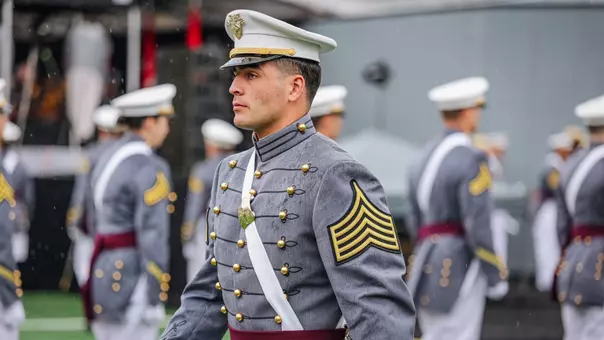
West Point is a highly-selective federal military academy with an enrollment of approximately 4,400 undergraduate students. West Point annually ranks among the national leaders in graduation rate of its student-athletes. West Point competes in NCAA Division I in football as an independent and in other NCAA sports as a member of the Patriot League, Atlantic Hockey Association, Eastern Intercollegiate Wrestling Association, Great American Rifle Conference, and the Eastern College Athletic Conference Gymnastics League.
Indicative of the focus on the whole-person student-athlete here, just last month, Army junior midfielder Sarah Goss was named to the ESPN The Magazine University Academic All-America Women’s Soccer Team. Goss joins former teammate Julie Jorgensen (USMA 2006), who was a first team pick her senior year (2005) after earning third team honors the previous season. NSCAA All-America Scholar-Athletes Kelly Demers (honorable mention) and Hall of Famer Holly Pedley (first team) were the first two Black Knights to shine both on the pitch and in the classroom.