
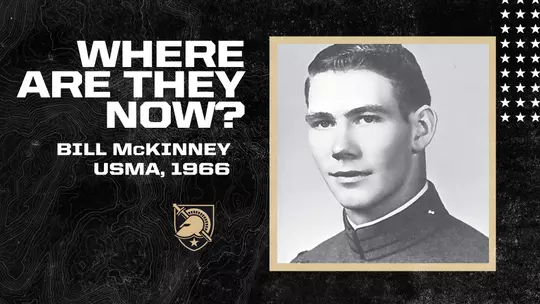
Where Are They Now? William R. (Bill) McKinney '66
William R. (Bill) McKinney '66
Sport: Football
Current Career: Retired
Former Career: Consultancy in National Security Affairs
William R. (Bill) McKinney, during a distinguished U.S. Army career spanning 30 years coupled with his 20-year civilian career, established himself as a national security expert on Northeast Asia with focus on the Korean Peninsula. He has been a valuable resource for insights into Asia for the U.S. government, U.S. businesses, and international organizations.
Colonel McKinney capped his 30-year career, which included 15 years in Korea, as the Defense and Army Attaché at the U.S. Embassy in Seoul from 1990 to 1996. Prior to this, he served as Chief of the U.S. Military Liaison Office to the Korean Defense Ministry; as Chief of the Far East Branch in the Political Military Division of the Army Headquarters at the Pentagon; and as the Political-Military Advisor to the Assistant Secretary of State for East Asian and Pacific Affairs at the State Department. As an infantry officer he was assigned to the 2nd Infantry Division, 101st Airborne Division, and 25th Infantry Division.
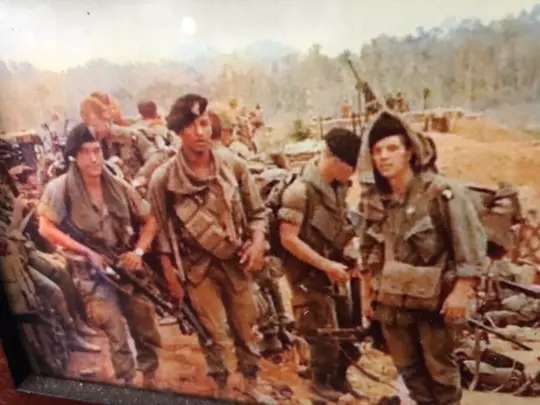
During his military service, including combat in Vietnam with the 101st Airborne Division, Colonel McKinney received the Silver Star, two Bronze Stars including one for Valor, the Army Legion of Merit, the Defense Superior Service Medal, the Combat Infantry Badge and other decorations.
As an independent consultant in international relations since his retirement from Federal Service in May 2016, Mr. McKinney has provided advice and assistance on Korean affairs to numerous clients, both in and out of the U.S. Government. He has also authored/co-authored articles on Korea for 38 North, the National Interest magazine, and the Pacific Forum.
From 2011-2016 as a GS-15 civil servant at HQ, U.S. Pacific Command (USPACOM) in Honolulu, Mr. McKinney was the Director of the DPRK Strategic Focus Group, a mini-think-tank for Commander, USPACOM, providing strategic assessment and synchronization of U.S. policy toward the DPRK. Later he served as the Senior Country Director for Korea.
From 2005-2011 as a Senior Military Analyst with Cubic Applications, Inc., he supported the OPCON Transition Support Team of US Forces Korea and provided strategic assessments for the Strategy, Plans and Policy Directorate at USPACOM.
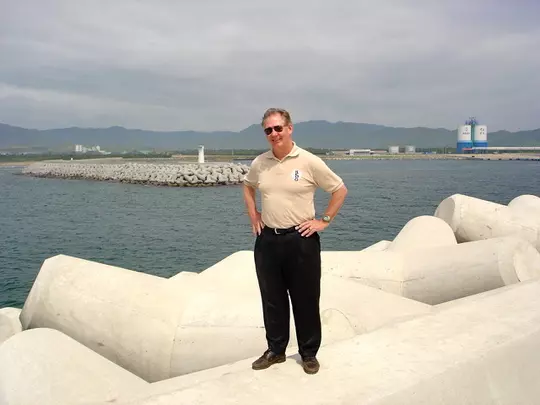
From 2001-2005 Mr. McKinney served as one of the American Representatives for the Korean Peninsula Energy Development Organization (KEDO), a quasi-diplomatic international consortium established to carry out key provisions of the 1994 Agreed Framework negotiated between the U.S. and Democratic People’s Republic of Korea (DPRK). He represented KEDO in North Korea and was charged with conducting negotiations with DPRK counterparts, providing consular protection functions for KEDO workers and visitors in North Korea, and exercising general oversight for the Light Water Reactor Project.
From 1996-2001 Mr. McKinney, as the Managing Director for Pacific Community Consultants, Inc., specialized in international business marketing and development for GM and Boeing.
McKinney played football for the Cadets in the final two years at West Point as a fullback and saw action in 10 games in his career.

As the years passed after graduation, I have always been surprised (still am) at the high degree of admiration proffered by friends (or recent acquaintances) because of my West Point degree.Colonel (R) Bill McKinney
Why West Point?
I wanted a quality education and knew from stories told by my mother about her brother Russell Jansen, Class of 1936, that West Point would give me that education. Further, throughout junior and senior high school period I sought class leadership positions, culminating as school president in my senior year. I knew West Point was the premier leadership teaching academy in the world and I wanted to be part of it. Finally, all my high school teachers, coaches, principals, counselors, etc. strongly supported my efforts to get in. My parents could not afford any school offering such quality education, so I knew it was up to me.
Favorite memory as an athlete at West Point?
Beating Navy (and Staubach) in 1964 and then enjoying the wave of cadets flowing out of the stands to carry us off the field. We had lost the previous five games against Navy, including a heartbreaker in 1963. My favorite memory above would not have been possible if Coach Paul Dietzel had not let me "walk-on" to the team at the beginning of my yearling year and had not promoted me to the varsity in my cow/junior year. My nickname on the football team was/is “Bones.” Coach Dietzel gave it to me at pre-camp in August 1964. It has nothing to do with my bones; rather Dietzel gave it to me after his good friend and basketball coach at Wake Forest, Bones McKinney.
Most influential person at West Point during your cadet experience?
General William Westmoreland, USMA Superintendent during my initial years as a cadet, offered us a striking picture of a true professional. General Westmoreland carried himself as the epitome of a leader within the profession of arms. Fortunately as a member of the football squad, I spent more time close to him than would otherwise be the case. This was heightened somewhat because he and my uncle were both members of the Class of 1936.
How did your experience as a cadet-athlete impact your professional and/or personal life post-USMA?
As the years passed after graduation, I have always been surprised (still am) at the high degree of admiration proffered by friends (or recent acquaintances) because of my West Point degree. And, my former role as a football player, once it becomes known, even as small as it was, seems to make the impact greater. The most impactful aspect as a former cadet-athlete, however, revolves around time management and getting the job done. Also, getting the job done regardless of blocks in the way — I call this "playing hurt" — similar to what every athlete goes thru to see a task fully accomplished.
What advice would you give to the current cadet-athletes at West Point?
Enjoy it and work hard always, even if it means "playing hurt" (metaphorically speaking) so that when it's over you can feel and know you gave it your all.
If you could write a message to your younger self (while a cadet-athlete) what would you say?
Don't accept less than you know or expect you can accomplish.
How often do you get together with your classmates and teammates?
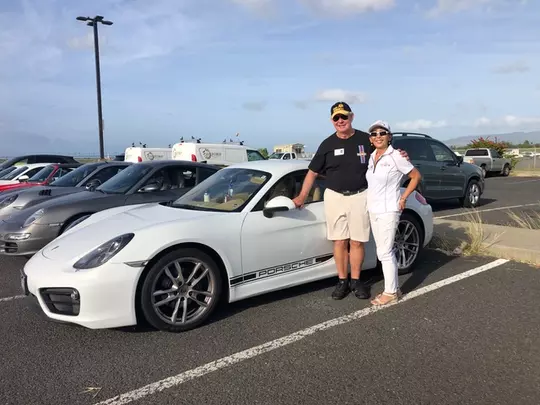
Although living in Hawaii hinders this for my wife and me, as we have gotten older, we look for more opportunities to get together, usually revolving around golf — about once or twice a year.

Are you a West Point grad and former cadet-athlete that wants the opportunity to be featured on the next Where Are the Now? To fill out our questionnaire, CLICK HERE.