
Army West Point Athletics
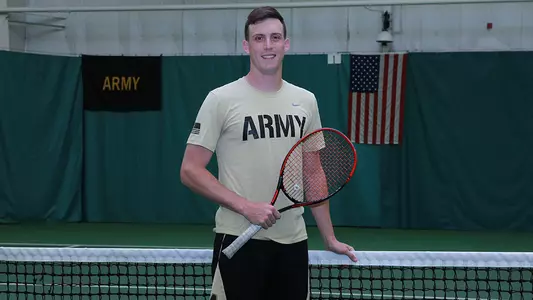
Feature Friday: Staying Positive with Every Breath
April 20, 2017 | Men's Tennis
Feature Friday highlights the tremendous personal stories our coaches and cadet-athletes have to share on a weekly basis. Each Friday, a new feature story will be prominently highlighted on GoArmyWestPoint.com. The features will include multimedia pieces, as well as written stories by media outlets and the Army West Point athletic communications staff.
On Feb. 7, 2016 everything changed for Army West Point junior Sam Lampman when he found himself grabbing his chest and asking for a medical timeout.
It was a scary situation for the senior men's tennis captain during his junior campaign.
"I was in the first set against Yale's number one player and I was up 4-1 even though I was considered a bit of an underdog," Lampman said. "After a really long point, I felt very sharp pains in my chest and back area on the left side. I honestly had no idea what was going on, I just felt a lot of pain in every movement I made."
After trying to continue to play, Lampman realized there was a problem. He went to the sideline after asking for a medical timeout to get looked at by head coach Jim Poling and the athletic trainer Dave Allen.
"We thought maybe it was a back thing, but we were not really sure what it was," Poling said. "Sam couldn't do anything, so we had our head officer representative take him to the hospital."
The emergency room doctor at the Keller Army Community Hospital took scans and tests on his chest to see what was wrong. He then brought Lampman into his office to explain his findings and admittance.
It turned out that Lampman had been trying to play through a condition called pneumothorax, also known as a collapsed lung. It is one of the scariest conditions for an athlete because it causes air to enter the area between the lung and the chest wall.
"The doctor showed me the X-ray of my two lungs," Lampman noted. "The outline on my right lung was full and perfectly fine, but the left side looked like a deflated balloon.
"After the match was complete, my teammates and coaches showed up in my hospital room to see how I was doing. Following the diagnosis, they put a tube in through my ribcage and lung to relieve some of the pressure and help inflate my lung. I had to have the tube in my side for two days."

Any injury can be scary for an athlete. A lot of different thoughts can go their minds as to why this happened, how are they going to fix it, or how long will they be sidelined. Another added concern to the equation for a cadet-athlete comes from the military side, as an injury could affect their career. Once an athlete gets the diagnosis, his or her competitive side takes over and turns to getting back to doing the thing they love the most.
"After spending five days in the hospital, I came back and rested for two weeks," Lampman explained. "I then started doing some cardio and joint exercise to help get stability back on my left side."
Up until the injury, Lampman had been a main part of the Black Knight tennis team since his freshman season. The Orlando, Fla., native was tabbed the Patriot League Rookie of the Year in 2014, while also earning All-Patriot League First Team accolades his rookie and sophomore campaigns. He also held down the No. 1 singles spot during his first two years.
But being unable to practice or work out with the team put a halt to Lampman's tennis career. On a daily basis though he would let his teammates know he was there for them.
"We were scheduled the following weeks to play top teams like Minnesota and Miami, but I was unable to travel because I could not be on an airplane at high altitudes," Lampman said. "Though I was unable to travel, I was there at every practice to see the team and still be in touch. I tried to help in any way I could with practice; I wanted to be involved."
Poling appreciated Lampman's willingness to continue to be there for his team as a leader.
"He was a strong presence even when he wasn't competing," the Army coach added. "Being a leader is more than just winning on the court, it is being someone that the rest of the team can look to for guidance; that is what Sam was. He worked hard and eventually was able to come back to compete later in the season."
It took a bit of time for Lampman to get back into the full swing of things, but eventually he was able to get back on the court later in the season.
"My first match back was rough," Lampman explained. "We were in a tough part of our season and I didn't have a lot of matches under my belt at that point."
Army was taking on a St. John's team that ranked 52nd in the nation and he was at the No. 2 flight where he fell 6-2 in the first set and trailed 3-2 in the second set before the match was clinched.
Though Lampman may have been cleared physically, Sam was being challenged mentally.
"I was not confident in my ability to compete at that level for my first few matches back," he noted. "Fortunately, the coaches and all the guys on the team never lost faith in me, even though I went through a losing streak following my return. The whole experience shook me up."

Lampman leaned on his teammates and the coaching staff, and their support helped him through the mental block holding him back.
"At first it was tough because I was not getting the results I wanted, but over time I was able to regain my confidence and compete as I had before my injury."
Lampman mentioned that he was lucky to be a part of the great community at West Point, which helped him get through the injury so he could return to the court.
"In my opinion, there is no better experience at West Point than being able to compete at a high level with some amazing guys who genuinely care about you," he added. "What really got me through the process was my teammates. They knew that I wasn't always bringing the best results to every match and practice, but they stuck with me every step of the way.
"We kept pushing each other during practice, and they were the ones who made me really want to improve."
It didn't take long before Lampman was able to return to his former winning ways, 20 days to be precise. He was able to kick-off the Patriot League slate with a doubleheader sweep at the No. 1 flight in late May of that year, where he won in straight sets against Lafayette and Holy Cross.
Now in his senior year, Lampman is back to competing as one of Army's top players.
"Honestly, I think that the confidence hurt me a little bit in the fall, but this spring I feel that I am playing better than ever," Lampman said.
Lampman's coaches and teammates continued to believe in him and his abilities to improve.
Coach Poling always reminded him after a tough loss that he had to have a short memory and that he was doing the right things. Assistant coach Randy Rowley was also there in helping him get his game back on track.
When asked what he would say to athletes going through a similar setback, Lampman answered saying, "I would tell them to rely on their family and team. Things like injuries are always unexpected and never happen at the best time, but with the help and support of other people, you can get through it."
Lampman also believes the way to get back on track is through determination.
"I would also say that hard work is the only way to get better," he continued. "Feeling sorry for yourself or telling yourself it is okay to take a day off or not give it your all is not going to get you anywhere. Have confidence in your abilities and work harder than before so that you can be better than where you left off."
As he heads into the Patriot League tournament this weekend, where the Black Knights are the No. 1 overall seed, Lampman has 13 singles victories to his name for the spring and 16 doubles wins with partner Gregory Shannon.
Following graduation in May, Lampman will enter the Field Artillery branch of the U.S. Army with his first duty assignment at Fort Stewart in Georgia.
Lampman has bounced back from a frightening situation and did so through determination and support from family, friends and teammates. His next journey, closing out a great career with a Patriot League Championship.
On Feb. 7, 2016 everything changed for Army West Point junior Sam Lampman when he found himself grabbing his chest and asking for a medical timeout.
It was a scary situation for the senior men's tennis captain during his junior campaign.
"I was in the first set against Yale's number one player and I was up 4-1 even though I was considered a bit of an underdog," Lampman said. "After a really long point, I felt very sharp pains in my chest and back area on the left side. I honestly had no idea what was going on, I just felt a lot of pain in every movement I made."
After trying to continue to play, Lampman realized there was a problem. He went to the sideline after asking for a medical timeout to get looked at by head coach Jim Poling and the athletic trainer Dave Allen.
"We thought maybe it was a back thing, but we were not really sure what it was," Poling said. "Sam couldn't do anything, so we had our head officer representative take him to the hospital."
The emergency room doctor at the Keller Army Community Hospital took scans and tests on his chest to see what was wrong. He then brought Lampman into his office to explain his findings and admittance.
It turned out that Lampman had been trying to play through a condition called pneumothorax, also known as a collapsed lung. It is one of the scariest conditions for an athlete because it causes air to enter the area between the lung and the chest wall.
"The doctor showed me the X-ray of my two lungs," Lampman noted. "The outline on my right lung was full and perfectly fine, but the left side looked like a deflated balloon.
"After the match was complete, my teammates and coaches showed up in my hospital room to see how I was doing. Following the diagnosis, they put a tube in through my ribcage and lung to relieve some of the pressure and help inflate my lung. I had to have the tube in my side for two days."
Any injury can be scary for an athlete. A lot of different thoughts can go their minds as to why this happened, how are they going to fix it, or how long will they be sidelined. Another added concern to the equation for a cadet-athlete comes from the military side, as an injury could affect their career. Once an athlete gets the diagnosis, his or her competitive side takes over and turns to getting back to doing the thing they love the most.
"After spending five days in the hospital, I came back and rested for two weeks," Lampman explained. "I then started doing some cardio and joint exercise to help get stability back on my left side."
Up until the injury, Lampman had been a main part of the Black Knight tennis team since his freshman season. The Orlando, Fla., native was tabbed the Patriot League Rookie of the Year in 2014, while also earning All-Patriot League First Team accolades his rookie and sophomore campaigns. He also held down the No. 1 singles spot during his first two years.
But being unable to practice or work out with the team put a halt to Lampman's tennis career. On a daily basis though he would let his teammates know he was there for them.
"We were scheduled the following weeks to play top teams like Minnesota and Miami, but I was unable to travel because I could not be on an airplane at high altitudes," Lampman said. "Though I was unable to travel, I was there at every practice to see the team and still be in touch. I tried to help in any way I could with practice; I wanted to be involved."
Poling appreciated Lampman's willingness to continue to be there for his team as a leader.
"He was a strong presence even when he wasn't competing," the Army coach added. "Being a leader is more than just winning on the court, it is being someone that the rest of the team can look to for guidance; that is what Sam was. He worked hard and eventually was able to come back to compete later in the season."
It took a bit of time for Lampman to get back into the full swing of things, but eventually he was able to get back on the court later in the season.
"My first match back was rough," Lampman explained. "We were in a tough part of our season and I didn't have a lot of matches under my belt at that point."
Army was taking on a St. John's team that ranked 52nd in the nation and he was at the No. 2 flight where he fell 6-2 in the first set and trailed 3-2 in the second set before the match was clinched.
Though Lampman may have been cleared physically, Sam was being challenged mentally.
"I was not confident in my ability to compete at that level for my first few matches back," he noted. "Fortunately, the coaches and all the guys on the team never lost faith in me, even though I went through a losing streak following my return. The whole experience shook me up."
Lampman leaned on his teammates and the coaching staff, and their support helped him through the mental block holding him back.
"At first it was tough because I was not getting the results I wanted, but over time I was able to regain my confidence and compete as I had before my injury."
Lampman mentioned that he was lucky to be a part of the great community at West Point, which helped him get through the injury so he could return to the court.
"In my opinion, there is no better experience at West Point than being able to compete at a high level with some amazing guys who genuinely care about you," he added. "What really got me through the process was my teammates. They knew that I wasn't always bringing the best results to every match and practice, but they stuck with me every step of the way.
"We kept pushing each other during practice, and they were the ones who made me really want to improve."
It didn't take long before Lampman was able to return to his former winning ways, 20 days to be precise. He was able to kick-off the Patriot League slate with a doubleheader sweep at the No. 1 flight in late May of that year, where he won in straight sets against Lafayette and Holy Cross.
Now in his senior year, Lampman is back to competing as one of Army's top players.
"Honestly, I think that the confidence hurt me a little bit in the fall, but this spring I feel that I am playing better than ever," Lampman said.
Lampman's coaches and teammates continued to believe in him and his abilities to improve.
Coach Poling always reminded him after a tough loss that he had to have a short memory and that he was doing the right things. Assistant coach Randy Rowley was also there in helping him get his game back on track.
When asked what he would say to athletes going through a similar setback, Lampman answered saying, "I would tell them to rely on their family and team. Things like injuries are always unexpected and never happen at the best time, but with the help and support of other people, you can get through it."
Lampman also believes the way to get back on track is through determination.
"I would also say that hard work is the only way to get better," he continued. "Feeling sorry for yourself or telling yourself it is okay to take a day off or not give it your all is not going to get you anywhere. Have confidence in your abilities and work harder than before so that you can be better than where you left off."
As he heads into the Patriot League tournament this weekend, where the Black Knights are the No. 1 overall seed, Lampman has 13 singles victories to his name for the spring and 16 doubles wins with partner Gregory Shannon.
Following graduation in May, Lampman will enter the Field Artillery branch of the U.S. Army with his first duty assignment at Fort Stewart in Georgia.
Lampman has bounced back from a frightening situation and did so through determination and support from family, friends and teammates. His next journey, closing out a great career with a Patriot League Championship.

Players Mentioned
/ Men's Tennis
/ Men's Tennis
Saturday, April 15
Sunday, January 22
Sunday, January 22
Saturday, January 21